
Can a doctor prescribe peptides?
Pharmacy-made peptides have strict ingredient rules. Since Oct 28, 2026, 6 more peptides are covered by an interim HHS policy. "Research use only" products are not medicine.
By the Peptide Science Desk Editorial TeamFact-checked against FDA and official sources · Not yet reviewed by a licensed clinician. How we check facts
Live tracker: is the FDA peptide policy final yet?
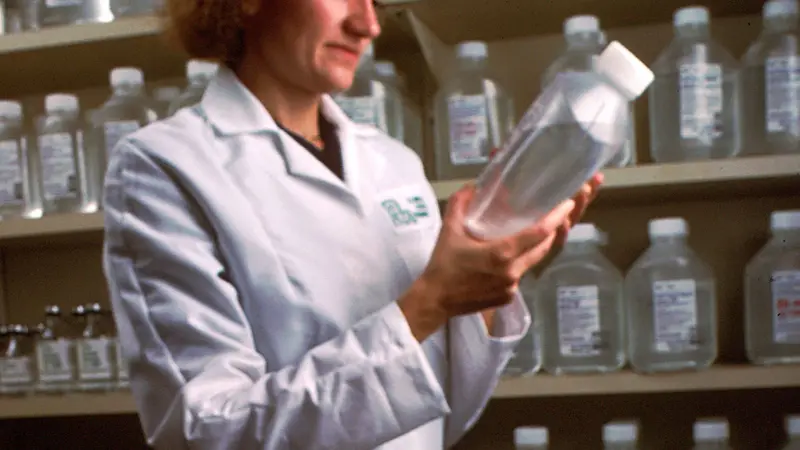
Can a doctor prescribe peptides?
- Yes, but it depends on which kind of peptide.
- Approved drugs: FDA-approved peptide medicines, like semaglutide (Wegovy, Ozempic) or tirzepatide (Zepbound, Mounjaro). This is the clearest path.
- Compounded: peptides made by a pharmacy. These need a prescription and must follow strict ingredient rules.
- "Research use only": products sold online for labs. These are not medicine for people.
Can a doctor prescribe peptides for weight loss?
- Yes. Some peptide drugs are FDA approved for weight loss, like Wegovy (semaglutide) and Zepbound (tirzepatide).
- Your doctor decides if one fits you, based on its FDA label and your health.
- Retatrutide ("GLP-3") is not approved. You can only legally get it in a clinical trial.
- The FDA says unapproved GLP-1 versions are not reviewed for safety, effectiveness, or quality before they are sold.
Can a doctor prescribe peptides for muscle growth?
- No peptide on our list is FDA approved to build muscle in healthy people.
- Tesamorelin (Egrifta) is approved for one use: reducing extra deep belly fat in adults with HIV.
- Doctors may prescribe an approved drug off-label, but proof for muscle is weak. See our guide on whether peptides really work.
- WADA bans many growth hormone peptides in sports.
What does "off-label" mean?
- Off-label means using an approved drug for a use, dose, or form that is not on its label.
- The FDA says that once a drug is approved, doctors generally may prescribe it for an unapproved use when they judge it is right for the patient.
- Ask your doctor: what proof is there for my use? The label only covers the approved uses.
Can a doctor prescribe compounded peptides?
- Yes, within limits. Federal law (section 503A) lets a pharmacy compound a drug for a named patient, based on a valid prescription.
- The raw ingredient must meet 1 of 3 rules. It has an official USP standard, or it is part of an FDA-approved drug, or it is on the FDA’s 503A list.
- BPC-157 is not on the official 503A list. But since October 28, 2026, HHS says it will not take action against pharmacies that make BPC-157, TB-500, KPV, MOTS-c, Semax and epitalon for a patient with a prescription, if strict rules are followed. This is interim, and it is not approval.
- Big "outsourcing facilities" (503B) register with the FDA, must follow drug factory quality rules (CGMP), and are inspected by the FDA. They have their own ingredient list.
- Compounded drugs are not FDA approved. The FDA does not review them for safety, effectiveness, or quality before they are sold. State boards of pharmacy oversee most pharmacies.
Compounded vs FDA-approved peptides: what is the difference?
- The FDA says compounded drugs are not FDA approved. The FDA does not check their safety, how well they work, or their quality before they are sold.
- Compounded drugs are not generics. A generic is a copy of an approved drug, and the FDA approves generics.
- The FDA says compounded drugs should only be used when an approved drug cannot meet a patient’s needs. One example is a person who is allergic to a dye in the approved drug.
- The FDA warns that poor compounding can cause germs in the drug (contamination) or the wrong strength.
- The FDA says biologics, medicines made from living things, cannot be compounded under these rules.
503A pharmacy or 503B outsourcing facility?
- A 503A pharmacy is a state-licensed pharmacy. State boards of pharmacy watch it most. The FDA can inspect it too.
- A 503B "outsourcing facility" is inspected by the FDA on a schedule based on risk.
- 503B facilities must follow CGMP, the FDA’s quality rules for drug factories. 503A pharmacies do not have to.
- 503B was created by a 2013 law, the Drug Quality and Security Act.
- If you buy a compounded drug online or through telehealth, the FDA says you may not know who made it. Check the pharmacy on BeSafeRx and talk to your doctor.
Can a doctor prescribe "research use only" peptides?
- No. A product labeled "research use only" or "not for human consumption" is not medicine for people. Its own label says so.
- The FDA has warned companies that sold such products to people with dosing instructions. It says they are of unknown quality and may be harmful.
- A prescription does not turn a research chemical into an approved or pharmacy-made medicine.
- If a clinic sends you to a "research" website to buy, that is a red flag.
Will a doctor prescribe peptides online (telehealth)?
- Telehealth doctors can prescribe approved drugs. Some also prescribe compounded ones.
- The FDA says people who buy compounded drugs through online pharmacies and telehealth sites may not know who made the drug, or whether that maker meets quality standards and is licensed.
- Ask: which pharmacy fills it? Is it licensed in my state? Is it a 503A pharmacy or a 503B outsourcing facility?
- FDA’s BeSafeRx says a safe online pharmacy always needs a prescription, lists a US address and phone, has a licensed pharmacist, and is licensed by a state board of pharmacy.
What changed on October 28, 2026?
- On October 14, 2026, the White House received the plan (RIN 0910-ZD94) for review. On October 28, 2026, HHS issued it.
- It covers 6 peptides: BPC-157, TB-500, KPV, MOTS-c, Semax and epitalon. HHS says it will not take action against a state-licensed pharmacy, a federal facility, or a licensed doctor that makes one of these peptides for a patient with a prescription, if all the rules are met.
- Each peptide has set forms. For example, Semax only as a nose spray, and TB-500 only as a shot. The rules include: the raw ingredient comes from an FDA-registered maker, with a lab test report (COA) for each batch; only 1 peptide from the HHS list per product, so no blends; the label says "This is a compounded drug product. Not for resale."; and serious side effects must be reported to the FDA.
- It is about regular (503A) pharmacies and doctors. It is interim (for now), and HHS can change or end it. It is not FDA approval. People can send comments for 2 weeks after it was published in the Federal Register on October 30, 2026 (about November 13 by our count).
- It does not cover "research use only" peptides sold online, supplements, or any other peptide, like DSIP (emideltide), CJC-1295 or ipamorelin. Our FDA peptide policy tracker has the full list of rules.
Key studies behind these approved peptide drugs
| Study type | People | Main finding | Limits |
|---|---|---|---|
| STEP 1 trial, Wegovy (semaglutide) | 1,961 adults with obesity | Lost 14.9% of body weight in 68 weeks vs 2.4% on placebo | People also had diet and exercise help |
| SURMOUNT-1 trial, Zepbound (tirzepatide) | 2,539 adults with obesity | Lost 15% to 21% of body weight in 72 weeks vs 3.1% on placebo | People with diabetes were not in it |
| Trial of tesamorelin (Egrifta) in HIV | 412 adults with HIV | Deep belly fat went down 15.2% in 26 weeks vs up 5.0% on placebo | Only for HIV belly fat, not muscle |
| TRIUMPH-1 trial, retatrutide (not approved) | 2,339 adults with obesity | Lost 17.6% to 25.0% of body weight in 80 weeks vs 3.9% on placebo | Not FDA approved yet |
Which kinds of peptides can be prescribed?
| FDA-approved peptide drug | Compounded by a pharmacy | "Research use only" product | |
|---|---|---|---|
| FDA approved? | Yes | No | No |
| FDA reviews quality before sale? | Yes | No. State boards oversee most pharmacies. | No |
| Can a doctor prescribe it? | Yes, on-label or off-label | Yes, if the ingredient is allowed (since Oct 28, 2026, also 6 peptides like BPC-157, under interim rules) | No. It is not for people. |
| Examples | Wegovy, Zepbound, Egrifta | Depends on ingredient rules; since Oct 28, 2026, BPC-157, Semax and 4 more | Vials sold online "for research" |
FAQ
Can a doctor prescribe BPC-157?
There is no approved BPC-157 drug. Since October 28, 2026, a doctor can prescribe BPC-157 made by a licensed pharmacy under HHS’s interim rules. It is still not FDA approved, and the policy can change.
Can a GP prescribe peptides in Australia or the UK?
We only cover US rules. Each country has its own medicine laws. Ask your doctor or that country’s medicine regulator.
Is a "peptide clinic" the same as a doctor?
Not always. Ask who the prescriber is, check their license with your state medical board, and ask which licensed pharmacy fills the order.
Will insurance pay for a prescribed peptide?
It depends on the drug and your plan. Ask your insurance company before you fill it.
What should I ask my doctor?
Ask if the peptide is approved for your problem, what proof there is, which pharmacy makes it, and what side effects to watch for. Our printable sheet lists more.
Can I get a prescription for a peptide I bought myself?
A doctor cannot make a product you bought online into a pharmacy medicine. Show your doctor what you have and ask about approved options.
Is a compounded peptide the same as a generic?
No. The FDA approves generics. It does not approve compounded drugs.
Do peptides require a prescription?
FDA-approved peptide drugs like Wegovy and Zepbound do. The 6 peptides in the October 28, 2026 HHS policy need a prescription and a licensed pharmacy. "Research use only" products are not medicine at all.
Can doctors prescribe research grade peptides?
No. "Research grade" or "research use only" products are not medicine for people, and a prescription does not change that.
Related pages
- GLP-1: Wegovy / Ozempic (semaglutide)FDA approved · Proof: Strong
- GLP-1: Zepbound / Mounjaro (tirzepatide)FDA approved · Proof: Strong
- Egrifta (tesamorelin)FDA approved · Proof: Strong
- BPC-157Not approved · Proof: Early
- GLP-1: RetatrutideIn testing · Proof: Strong
- HCG (Pregnyl, Novarel)FDA approved · Proof: Strong
- Does insurance cover peptides?Guide
- Can peptides make you infertile?Guide
- Are Peptides Legal in the US?Guide
- Is BPC-157 Legal in the USA? (October 2026)Guide
- Hims peptides: what they plan to sell and whenGuide
- FDA Category 2 Peptide List (2026): Which Peptides Are on It Now?Guide
- Compounded Tirzepatide vs Zepbound: What Is the Difference?Guide
- FDA peptide policy trackerTool
- Will insurance cover my peptide?Tool
- HHS peptide policy checkerTool
- Do peptides show up on a drug test?Tool
- Compare GLP-1: Wegovy / Ozempic vs GLP-1: Zepbound / MounjaroComparison tool
We never share doses or tell you where to buy. Always ask your doctor. Print our doctor questions sheet.
Sources
- FDA: Understanding unapproved use of approved drugs "off label"
- 21 U.S.C. 353a (section 503A): compounding for an identified patient with a valid prescription
- FDA: Bulk drug substances used in compounding (the 3 rules for 503A)
- FDA: Compounding and the FDA, questions and answers (telehealth, state boards, 503B)
- FDA: Information for outsourcing facilities (503B)
- FDA: Registered outsourcing facilities (503B list)
- FDA: Bulk drug substances that may present significant safety risks (Category 2 and withdrawn list)
- FDA: Concerns with unapproved GLP-1 drugs used for weight loss (28-day vial advice, warm shipments, “research” products)
- FDA BeSafeRx: Considering an online pharmacy? (safe signs and warning signs)
- Reginfo.gov: OMB review record for the peptide policy (RIN 0910-ZD94)
- Reginfo.gov: EO 12866 meetings for RIN 0910-ZD94 (Oct 21, 2026, 3:00 PM)
- FDA: Understanding the risks of compounded drugs
- FDA: BeSafeRx, know your online pharmacy
- PubMed: Wilding et al., Once-weekly semaglutide in adults with overweight or obesity (STEP 1), NEJM 2021
- PubMed: Jastreboff et al., Tirzepatide once weekly for the treatment of obesity (SURMOUNT-1), NEJM 2022
- PubMed: Falutz et al., Metabolic effects of a growth hormone-releasing factor (tesamorelin) in patients with HIV, NEJM 2007
- PubMed: Jastreboff et al., Retatrutide, a triple hormone receptor agonist, for treatment of obesity (TRIUMPH-1), NEJM 2026
- HHS: Enforcement Discretion Policy Regarding 503A Compounding Using Certain Peptide Bulk Drug Substances (Oct 28, 2026)
- Federal Register (public inspection): FR Doc. 2026-22192, HHS peptide compounding policy