
FDA peptide policy tracker
HHS issued the peptide policy on October 28, 2026. It covers 6 peptides: BPC-157, TB-500, KPV, MOTS-c, Semax and epitalon. It is NOT FDA approval.
By the Peptide Science Desk Editorial TeamFact-checked against FDA and official sources · Not yet reviewed by a licensed clinician. How we check facts
Status right now
- Source
- Policy text public?Yes. HHS posted it Oct 28, 2026. Source
- Federal Register notice?Yes. Printed Oct 30, 2026 (91 FR 68526, FR Doc. 2026-22192). Source
- Which peptides?6: BPC-157, TB-500, KPV, MOTS-c, Semax, epitalon Source
- Does it make a peptide FDA approved?No. It says compounded drugs are not FDA approved. Source
- Public comments?Yes, for 2 weeks after Oct 30 (about Nov 13 by our count; Docket HHS-OASH-2026-0496) Source
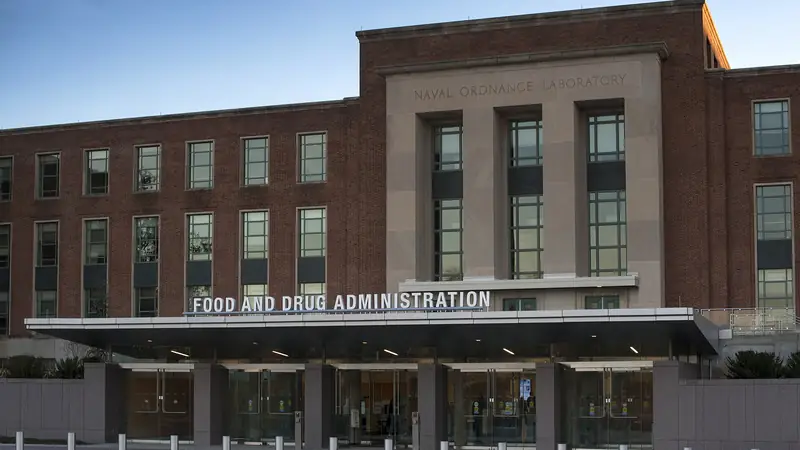
What is the FDA interim peptide policy?
- Its full name is "Enforcement Discretion Policy Regarding 503A Compounding Using Certain Peptide Bulk Drug Substances." Its ID number is RIN 0910-ZD94. HHS Secretary Robert F. Kennedy Jr. signed it.
- HHS posted it on October 28, 2026. A Federal Register notice was filed the same day and printed on October 30, 2026 (91 FR 68526).
- "Interim" means for now, until the FDA makes a lasting rule. "Compounding" means a pharmacy mixes a drug for 1 patient.
- HHS says it does not plan to punish State-licensed pharmacies, Federal facilities or licensed doctors that make these 6 peptides, if they follow every rule: BPC-157, epitalon, KPV, MOTS-c, Semax and TB-500.
- HHS says the goal is to move people away from "research use only" peptides from foreign makers, which it says are a safety risk.
The rules pharmacies must follow
- A prescription for each patient.
- The peptide comes from an FDA-registered maker that follows good factory rules, with a lab test report (certificate of analysis) for each batch.
- Only 1 peptide per product. No blends.
- Only the allowed forms (see the table below). Pills need proof they work when swallowed.
- Only a plain FDA-cleared syringe can come with it.
- The label says "This is a compounded drug product. Not for resale."
- Serious side effects and quality problems are reported to the FDA (MedWatch) and to the states.
Which peptides, and in what form?
| Peptide | Allowed forms |
|---|---|
| BPC-157 (acetate) | Shot under the skin or in the muscle, pill, or on the skin |
| TB-500 (acetate) | Shot under the skin or in the muscle |
| MOTS-c (acetate) | Shot under the skin or in the muscle |
| Epitalon (acetate) | Shot under the skin or in the muscle, in short courses |
| Semax (free base) | Nose spray |
| KPV (acetate) | Pill or on the skin |
Are peptides legal now?
- For these 6 peptides, a licensed pharmacy may now make them for you with a prescription, if it follows the HHS rules.
- They are still not FDA approved. The FDA has not checked them for safety or if they work.
- "Research use only" or "not for human use" products are still not medicine for people.
- FDA-approved peptide drugs, like Wegovy or Zepbound, are legal with a prescription, the same as before.
- State pharmacy rules still apply.
More: Are peptides legal in the US? · Is BPC-157 legal? · Check your peptide: HHS policy checker
Can I comment?
Yes. The Federal Register notice, printed October 30, 2026, says anyone can send comments for 2 weeks after publication, on regulations.gov (comment page), Docket No. HHS-OASH-2026-0496. By our count that is about November 13, 2026; the notice does not print an exact date. HHS calls the policy a draft and says it is not binding.
Was the FDA peptide ban lifted?
Partly, for 6 peptides. The FDA had put BPC-157 and other peptides on its "Category 2" list of substances that may be too risky for pharmacies to mix. In April 2026, most were moved off that list, but they were still not allowed. On October 28, 2026, HHS said it will not punish licensed pharmacies that make 6 of them (BPC-157, TB-500, KPV, MOTS-c, Semax and epitalon) under strict rules.
This is not approval. The peptides are still unapproved drugs and are still not on the official pharmacy ingredient list. HHS can change the policy if a safety problem shows up. Talk to your doctor. See the FDA Category 2 peptide list, or check any peptide with the HHS peptide policy checker.
The July 2026 FDA peptide panel
On July 23-24, 2026, the FDA Pharmacy Compounding Advisory Committee met about 7 peptides. The advisers are outside experts who give the FDA advice. The FDA does not have to follow it.
- July 23: BPC-157, KPV, TB-500, and MOTS-c. The panel voted yes on all 4.
- July 24: emideltide (DSIP), Semax, and epitalon. The panel voted yes on Semax and epitalon, and no on emideltide (7 no, 6 yes, 1 did not vote).
- Before the meeting, FDA staff advised against all 7.
- Does this mean they are approved? No. None of these peptides is FDA approved.
- What happened next? On October 28, 2026, HHS put the 6 peptides the panel liked into its interim policy. Emideltide (DSIP) is not covered. Check a peptide with the HHS peptide policy checker.
White House meetings
| When | Who asked | Status |
|---|---|---|
| Oct 21, 3:00 PM ETOct 21, 10:00 PM Riyadh | American Academy of Peptide Medicine (Lee Rosebush)First listed Oct 18 | Listed |
| Oct 23, 2:00 PM ETOct 23, 9:00 PM Riyadh | Hims & Hers HealthFirst listed Oct 21 | Listed |
| Oct 27, 2:00 PM ETOct 27, 9:00 PM Riyadh | Alliance for Pharmacy Compounding (Scott Brunner)First listed Oct 21 | Listed |
| Oct 27, 2:30 PM ETOct 27, 9:30 PM Riyadh | Center for Science in the Public Interest (Quynh Nguyen)First listed Oct 22 | Listed |
Who asked to meet?
The groups are a peptide medicine group, a telehealth company (Hims & Hers), a pharmacy compounding trade group, a consumer health group (the Center for Science in the Public Interest), and 2 consulting firms speaking for clients. Their views are not posted on Reginfo.gov, so we do not guess what they said.
What is an "EO 12866 meeting"?
- Executive Order 12866 is the rule book for how the White House reviews agency rules and policies. The office that does it is called OIRA. It is part of OMB.
- Groups outside the government can ask OIRA for a meeting while a policy is under review. The order says the FDA must be invited.
- OIRA must make public the dates, the names of people involved and the subject. That is why these meetings show up on Reginfo.gov.
- After the policy is published (or dropped), OIRA must make public the papers that outside groups sent in. So handouts may only show up later.
- For many reviews, the order sets a 90-day target that can be extended. Reginfo.gov lists no legal deadline for this one.
What did RFK Jr. say about peptides?
On October 20, 2026, Reuters reported that Health Secretary Robert F. Kennedy Jr. said the goal is "a regulated marketplace." He said this in a Fox News interview. Reuters quoted him: "Americans are going to be buying these anyway." He said the aim is that what people get "is what they claim to be, that is safe, that the factories are inspected."
Reuters also wrote that the peptides under review have not been approved by the FDA as safe or effective. His words are a goal, not the policy text.
What it does and does not change
What it does (from the HHS text)
- It is about compounding. That means a licensed pharmacy or doctor mixes a drug for 1 patient with a prescription.
- HHS says it does not plan to punish them for making 6 peptides: BPC-157, TB-500, KPV, MOTS-c, Semax and epitalon. This is called "enforcement discretion."
- Each peptide has set uses. BPC-157: shots, pills or skin. TB-500 and MOTS-c: shots. Epitalon: shots, in short courses. Semax: nose spray. KPV: pills or skin.
- The pharmacy must buy the peptide from an FDA-registered maker, with a lab test report for each batch.
- Each product can have only 1 peptide. No mixes. The label must say "This is a compounded drug product. Not for resale."
- Pharmacies must report serious side effects to the FDA (MedWatch).
- It is "interim." That means for now. HHS can change or end it, for example if a safety problem shows up.
What it does not do
- It does not make any peptide FDA approved. The FDA has not checked these products for safety or if they work.
- It does not make "research use only" or "not for human use" products legal to sell as medicine. HHS says the goal is to move people away from them.
- It does not cover supplements or gym and online sellers. It is about licensed pharmacies and doctors, with a prescription.
- It does not cover other peptides, like emideltide (DSIP).
- It does not add these peptides to the official pharmacy ingredient list. That needs a longer rule process.
- It does not change sports bans. WADA bans many peptides, and from January 1, 2027, its list names "peptides" in its rule for drugs not approved anywhere.
- It does not change state pharmacy rules by itself.
Timeline
- October 30, 2026 (reactions)ReportedPolitico reported that states are not bound by the HHS policy: many are expected to go along, but some may set stricter rules or keep blocking peptide compounding. AJMC reported that FDA career scientists had recommended against all 6 peptides, that the Partnership for Safe Medicines petitioned the FDA to block compounding of them, and that an FDA advisory committee was scheduled (as of July) to review 5 more peptides in February.Politico Prescription Pulse (Oct 30, 2026)
- October 30, 2026OfficialThe Federal Register printed the HHS notice (91 FR 68526). It says written comments can be sent for 2 weeks after publication on regulations.gov, Docket No. HHS-OASH-2026-0496.Federal Register: FR Doc. 2026-22192 (published Oct 30, 2026)
- October 29, 2026 (reactions)ReportedNPR reported that the consumer group Public Citizen says the policy puts patients at risk by going around FDA approval. NPR also noted that outsourcing facilities (503B), which make larger batches, are not part of the policy, and that a Florida compounding pharmacy said it needs time to prepare before filling prescriptions.NPR: HHS will let pharmacies make popular peptides not approved by the FDA (Oct 29, 2026)
- October 28, 2026 (meetings)OfficialReginfo.gov now lists 4 meetings. The 2 meetings planned for October 28 are no longer on the list.Reginfo.gov: meeting list for RIN 0910-ZD94
- October 28, 2026OfficialHHS issued the peptide policy. It lists 6 peptides: BPC-157, epitalon, KPV, MOTS-c, Semax and TB-500. Pharmacies must use tested ingredients from FDA-registered makers, use only 1 peptide per product, and report bad side effects to the FDA. A Federal Register notice was filed the same day and published October 30.Federal Register: public inspection, FR Doc. 2026-22192
- October 26, 2026OfficialStill pending at OMB. Still 6 meetings listed. No Federal Register notice. No policy text.Reginfo.gov: RIN 0910-ZD94 review page
- October 23, 2026OfficialA 6th meeting was added: Faegre Drinker Consulting for the Collaborative for Evidence-Based Medicines (Oct 28). No notes or handouts were posted when we checked.Reginfo.gov: meeting list for RIN 0910-ZD94
- October 22, 2026OfficialThe list grew to 5: the Center for Science in the Public Interest (Oct 27) and Carmen Group for Medivant Healthcare (Oct 28) were added.Reginfo.gov: meeting list for RIN 0910-ZD94
- October 21, 2026OfficialThe list grew to 3 meetings: Hims & Hers Health (Oct 23) and the Alliance for Pharmacy Compounding (Oct 27) were added.Reginfo.gov: meeting list for RIN 0910-ZD94
- October 20, 2026ReportedHealth Secretary Kennedy said on TV the goal is a "regulated marketplace" for peptides.Reuters via Yahoo (Oct 20, 2026)
- October 18, 2026OfficialReginfo.gov listed the first meeting: October 21, asked for by the American Academy of Peptide Medicine.Reginfo.gov: meeting listing
- October 15-16, 2026ReportedThe AP reported, citing 2 people who did not give their names, that the plan would let pharmacies make some popular peptides for a while, including BPC-157. This is not confirmed by the FDA.AP via NBC News (Oct 16, 2026)
- October 15, 2026ReportedReuters reported that the FDA sent the plan to the White House, and that Hims & Hers has said it plans to offer peptides if the rules allow.Reuters via Yahoo (Oct 15, 2026)
- October 14, 2026OfficialThe White House budget office (OMB) got the FDA plan for review. It is listed as a "notice" with no legal deadline.Reginfo.gov: RIN 0910-ZD94 review page
- July 23-24, 2026 (vote details)ReportedReuters reported the votes. July 23: yes on BPC-157, KPV, TB-500 and MOTS-c. July 24: yes on Semax and epitalon, and no on emideltide (DSIP), 7 no, 6 yes, 1 did not vote. FDA staff had advised against all 7. The advisers are outside experts. The FDA does not have to follow them.Reuters: FDA panel votes to exclude peptide emideltide from pharmacy compounding list (July 24, 2026)
- July 2026ReportedNews reports say the advisers voted to loosen limits on 6 of the 7 peptides. They say FDA staff scientists found none had been studied enough. Advice like this is not binding.Reuters via Yahoo (Oct 20, 2026)
- July 23-24, 2026OfficialFDA advisers (the Pharmacy Compounding Advisory Committee) talked about 7 peptides, including BPC-157, TB-500 and Semax, for the pharmacy ingredient list.FDA: July 23-24, 2026 Pharmacy Compounding Advisory Committee
- By April 22, 2026OfficialThe FDA page on risky compounding ingredients lists BPC-157 under "nominated but withdrawn," not in Category 2.FDA: Bulk drug substances that may present significant safety risks
FDA peptide policy: what happened when
Official steps, news reports, and the White House meetings on the plan
- Official record
- News report
- OMB meeting
Official recordBy April 22, 2026The FDA page on risky compounding ingredients lists BPC-157 under "nominated but withdrawn," not in Category 2.
Official recordJuly 23-24, 2026FDA advisers (the Pharmacy Compounding Advisory Committee) talked about 7 peptides, including BPC-157, TB-500 and Semax, for the pharmacy ingredient list.
News reportJuly 23-24, 2026 (vote details)Reuters reported the votes. July 23: yes on BPC-157, KPV, TB-500 and MOTS-c. July 24: yes on Semax and epitalon, and no on emideltide (DSIP), 7 no, 6 yes, 1 did not vote. FDA staff had advised against all 7. The advisers are outside experts. The FDA does not have to follow them.
Official recordOctober 14, 2026The White House budget office (OMB) got the FDA plan for review. It is listed as a "notice" with no legal deadline.
News reportOctober 15, 2026Reuters reported that the FDA sent the plan to the White House, and that Hims & Hers has said it plans to offer peptides if the rules allow.
News reportOctober 15-16, 2026The AP reported, citing 2 people who did not give their names, that the plan would let pharmacies make some popular peptides for a while, including BPC-157. This is not confirmed by the FDA.
Official recordOctober 18, 2026Reginfo.gov listed the first meeting: October 21, asked for by the American Academy of Peptide Medicine.
News reportOctober 20, 2026Health Secretary Kennedy said on TV the goal is a "regulated marketplace" for peptides.
Official recordOctober 21, 2026The list grew to 3 meetings: Hims & Hers Health (Oct 23) and the Alliance for Pharmacy Compounding (Oct 27) were added.
OMB meetingMeeting: American Academy of Peptide Medicine (Lee Rosebush)Oct 21, 3:00 PM ET (Oct 21, 10:00 PM Riyadh)
Official recordOctober 22, 2026The list grew to 5: the Center for Science in the Public Interest (Oct 27) and Carmen Group for Medivant Healthcare (Oct 28) were added.
Official recordOctober 23, 2026A 6th meeting was added: Faegre Drinker Consulting for the Collaborative for Evidence-Based Medicines (Oct 28). No notes or handouts were posted when we checked.
OMB meetingMeeting: Hims & Hers HealthOct 23, 2:00 PM ET (Oct 23, 9:00 PM Riyadh)
Official recordOctober 26, 2026Still pending at OMB. Still 6 meetings listed. No Federal Register notice. No policy text.
OMB meetingMeeting: Alliance for Pharmacy Compounding (Scott Brunner)Oct 27, 2:00 PM ET (Oct 27, 9:00 PM Riyadh)
OMB meetingMeeting: Center for Science in the Public Interest (Quynh Nguyen)Oct 27, 2:30 PM ET (Oct 27, 9:30 PM Riyadh)
Official recordOctober 28, 2026HHS issued the peptide policy. It lists 6 peptides: BPC-157, epitalon, KPV, MOTS-c, Semax and TB-500. Pharmacies must use tested ingredients from FDA-registered makers, use only 1 peptide per product, and report bad side effects to the FDA. A Federal Register notice was filed the same day and published October 30.
Official recordOctober 28, 2026 (meetings)Reginfo.gov now lists 4 meetings. The 2 meetings planned for October 28 are no longer on the list.
News reportOctober 29, 2026 (reactions)NPR reported that the consumer group Public Citizen says the policy puts patients at risk by going around FDA approval. NPR also noted that outsourcing facilities (503B), which make larger batches, are not part of the policy, and that a Florida compounding pharmacy said it needs time to prepare before filling prescriptions.
Official recordOctober 30, 2026The Federal Register printed the HHS notice (91 FR 68526). It says written comments can be sent for 2 weeks after publication on regulations.gov, Docket No. HHS-OASH-2026-0496.
News reportOctober 30, 2026 (reactions)Politico reported that states are not bound by the HHS policy: many are expected to go along, but some may set stricter rules or keep blocking peptide compounding. AJMC reported that FDA career scientists had recommended against all 6 peptides, that the Partnership for Safe Medicines petitioned the FDA to block compounding of them, and that an FDA advisory committee was scheduled (as of July) to review 5 more peptides in February.
HHS issued an interim policy on Oct 28, 2026 for 6 peptides. Nothing in this timeline made any peptide FDA approved.
What we are watching for
- Done: the Federal Register printed the notice on October 30, 2026 (91 FR 68526).
- The 2-week public comment period on regulations.gov (Docket HHS-OASH-2026-0496).
- Any change to the policy, or any FDA safety warning about these 6 peptides.
- FDA rules to add (or not add) these peptides to the official pharmacy list.
Share this tracker
Know someone who thinks peptides are "legal now"? Send them this page.
FAQ
Is the FDA peptide policy final?
It is out. HHS issued it on October 28, 2026, and the Federal Register printed the notice on October 30, 2026 (91 FR 68526). But it is "interim," which means for now. HHS calls it a draft, takes comments for 2 weeks, and can change or end it.
Which peptides are in the FDA peptide policy?
6 peptides: BPC-157, epitalon, KPV, MOTS-c, Semax and TB-500. Emideltide (DSIP) is not on the list.
Can I ask my doctor for BPC-157 now?
You can ask. Under the new policy, a licensed pharmacy may make BPC-157 for you with a prescription if it follows the HHS rules. BPC-157 is still not FDA approved. Your doctor and pharmacist decide, and state rules still apply.
Is BPC-157 FDA approved now?
No. The policy says compounded drugs are not FDA approved. HHS only says it does not plan to punish pharmacies that make it under the rules.
Are "research use only" peptides legal now?
No. The policy is only for licensed pharmacies and doctors with a prescription. HHS says it wants to move people away from research-use-only peptides from foreign makers.
Can a pharmacy mix 2 peptides in 1 shot?
No. The policy says each product can have only 1 peptide from the list.
Can I comment on the peptide policy?
Yes. The Federal Register notice, printed October 30, 2026, says comments are open for 2 weeks after publication, on regulations.gov, Docket No. HHS-OASH-2026-0496. By our count that is about November 13, 2026. The notice does not print an exact date.
Was the FDA peptide ban lifted?
Partly, for 6 peptides, under strict rules. They are still not on the official list of ingredients pharmacies may use, and they are not FDA approved.
Did the White House meetings approve BPC-157 or other peptides?
No. A meeting is a chance for an outside group to share its view. It is not a vote. The decision came from HHS in the policy.
What is an EO 12866 review?
EO 12866 is a presidential order. It sets up White House review of important agency rules and actions before they come out. Reginfo.gov tracks each review.
When will we know what was said at the meetings?
The order says the review office must make public the papers it got from outside groups after the policy is published or dropped. So they may show up on Reginfo.gov soon.
Did the July 2026 FDA panel approve BPC-157?
No. The panel only gives advice. HHS later put the 6 peptides the panel liked into its interim policy. None of them is FDA approved.
Which peptide did the panel turn down?
Emideltide, also called DSIP, a peptide sold for sleep. It is not in the new policy.
Will Hims sell peptides?
Reuters reported on October 15 that Hims & Hers has said it plans to offer peptides if the rules allow. Hims was on the White House meeting list for October 23. On October 29, 2026, Hims previewed "Peptides+" and said BPC-157 and TB-500 would follow "when allowable."
Does this plan cover GLP-1 drugs like Wegovy?
No. The list has only 6 peptides, and no GLP-1 drug. Wegovy, Ozempic, Zepbound and Mounjaro are already FDA-approved drugs.
Is BPC-157 still banned in 2026?
Not fully. Since October 28, 2026, HHS says it will not act against licensed pharmacies that make BPC-157 for a patient with a prescription, under strict rules. It is still not FDA approved, and "research use only" BPC-157 is still not medicine for people.
Are the 6 peptides on the FDA 503A bulks list now?
No. The HHS policy is interim enforcement discretion. It does not add BPC-157, TB-500, KPV, MOTS-c, Semax or epitalon to the 503A bulks list. That needs a longer FDA rule process.
Do you get money from peptide sellers?
No. We do not sell peptides, link to sellers or share doses.
Related pages
- HHS peptide policy checkerTool
- Are peptides legal in the US?Guide
- Is BPC-157 legal in the USA?Guide
- FDA Category 2 peptide listGuide
- Is my peptide FDA approved?Tool
- Hims peptides: what they plan to sellGuide
- Why are peptides in the news?Guide
- What are peptides?Start here
- Latest peptide newsNews
Sources
- HHS: Enforcement Discretion Policy Regarding 503A Compounding Using Certain Peptide Bulk Drug Substances (policy text with Appendix A and B, Oct 28, 2026)
- Federal Register: Enforcement Discretion Policy Regarding 503A Compounding Using Certain Peptide Bulk Drug Substances, 91 FR 68526 (published Oct 30, 2026)
- Regulations.gov: comment page, Docket No. HHS-OASH-2026-0496
- Federal Register: public inspection, FR Doc. 2026-22192 (filed Oct 28, 2026, published Oct 30, 2026)
- Federal Register: unpublished PDF of FR Doc. 2026-22192
- Reginfo.gov: Interim Access Policy for Compounding Using Certain Peptides (RIN 0910-ZD94), pending EO 12866 review
- Reginfo.gov: EO 12866 meetings for RIN 0910-ZD94
- Federal Register: search for RIN 0910-ZD94 (no documents found Oct 25, 2026)
- FDA: July 23-24, 2026 Pharmacy Compounding Advisory Committee meeting
- FDA: Bulk drug substances that may present significant safety risks (Category 2 and withdrawn list)
- FDA: Bulk drug substances used in compounding
- AP via NBC News: Trump administration advances plan for peptide drugs (Oct 16, 2026)
- Reuters via Yahoo: Kennedy says Trump administration aims for regulated market for peptides (Oct 20, 2026)
- Holland & Knight (law firm analysis): Peptides at a Crossroads (Oct 2026), says no peptide has been added to the 503A bulks list
- Executive Order 12866: Regulatory Planning and Review (archives.gov), Section 6(b)
- Reuters via Yahoo: US FDA takes step to change peptide compounding policy (Oct 15, 2026)
- Reuters: FDA panel votes to exclude peptide emideltide from pharmacy compounding list (July 24, 2026)
- FDA: Bulk drug substances nominated for 503A compounding (category lists, updated May 14, 2026)
- AmSpa: FDA sends peptide interim access policy to White House (Oct 16, 2026)
- WADA: 2027 List summary of changes ("peptides" added to S0)